What Is the Difference Between a Fade and a Taper? and Which One Should You Get?
A lot of people use the words “fade” and “taper” like they mean the same thing. They are related, but they are not identical. If you have ever sat in a barber chair and felt unsure what to ask for, you are not alone.
In this guide, you will learn the difference between a fade and a taper in plain English, with real examples, so you can choose the right haircut and explain it clearly to your barber.
What Is a Taper Haircut?
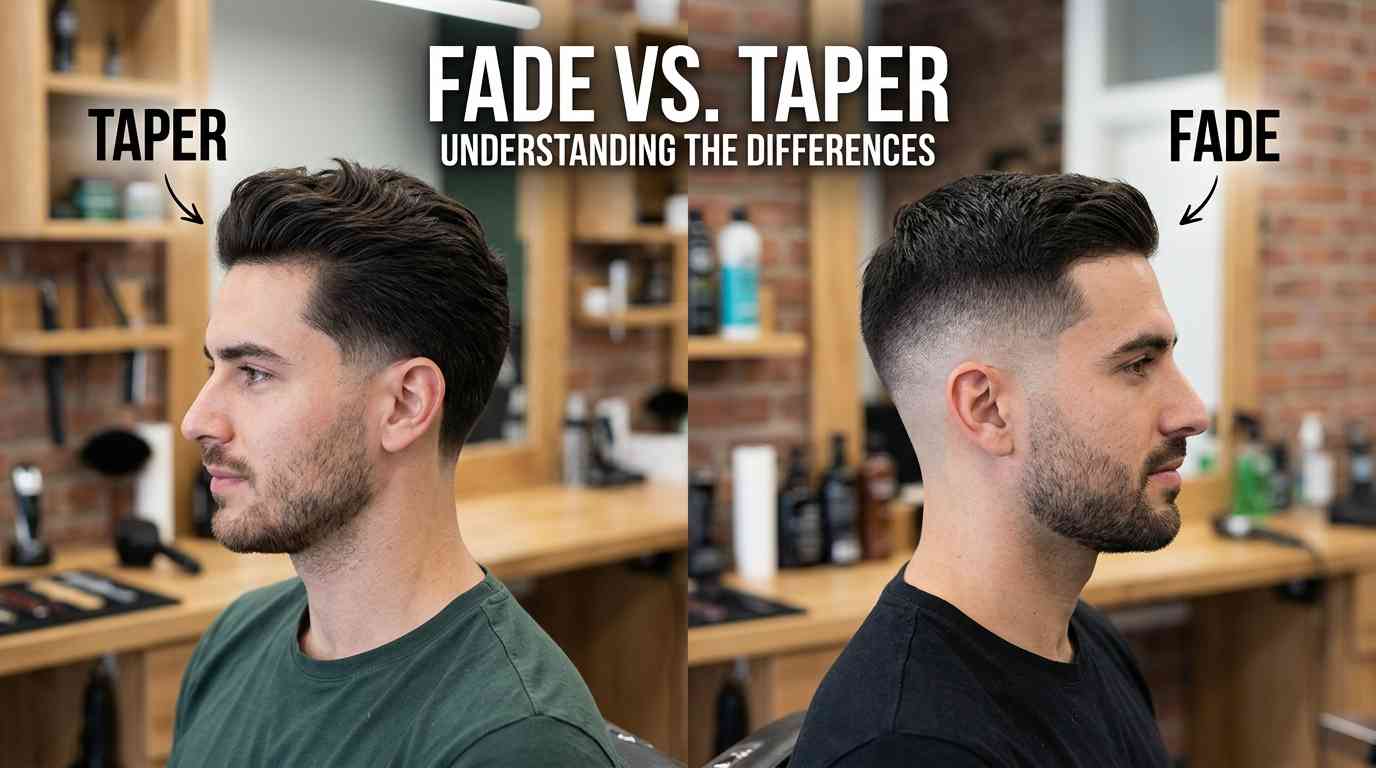
A taper is a gradual change in hair length, usually focused around the edges of the haircut. The hair gets shorter as it moves down the sides and back, but it does not necessarily go down to the skin.
Most tapers keep some length on the lower sides and nape, which creates a clean, natural finish instead of a high-contrast look.
How a taper looks in real life
With a taper, the top and upper sides can stay almost the same, while the hair near the sideburns and neckline becomes neatly shorter.
This is why tapers are common in classic business haircuts and styles that need to look clean without looking “too barbered.”
Common types of tapers
Barbers often describe tapers by where they are most noticeable:
- Low taper (subtle and close to the hairline)
- Medium taper (more visible but still natural)
- High taper (cleaner and sharper, but not always down to skin)
What Is a Fade Haircut?
A fade is also a gradual change in length, but it is usually much tighter and more dramatic than a taper. In most fades, the hair gets very short and often blends down to the skin (or close to it).
Fades are designed to look sharp and intentional. The blend is the main feature, not just a small clean-up at the edges.
How a fade looks in real life
A fade typically removes more bulk from the sides and back than a taper. The haircut looks “lighter” on the sides, and the transition from short to long is more obvious.
That strong contrast is what gives fades their crisp, modern look.
Common types of fades
Fades are usually named by height and how short they go:
- Low fade (starts low near the ear and neckline)
- Mid fade (starts around the temple area)
- High fade (starts higher on the head for a bold look)
- Skin fade (fades all the way to bare skin)
The Difference Between a Fade and a Taper
Both cuts blend hair from longer to shorter. The key difference is where the blend happens and how short it gets.
A taper is usually softer and stays longer near the bottom. A fade usually goes shorter and covers more of the sides and back.
Quick comparison table: fade vs. taper
| Feature | Taper | Fade |
|---|---|---|
| Main look | Natural, clean, subtle | Sharp, bold, high-contrast |
| How short it gets | Often not to skin | Often to skin (especially skin fades) |
| Where it’s focused | Sideburns, neckline, lower edges | Larger area of sides and back |
| Grow-out | Usually looks neat longer | Can look messy faster as lines grow out |
| Best for | Classic styles, professional settings | Modern styles, high-definition look |
Is a Fade Just a Type of Taper?
People debate this, but here is the simplest way to think about it:
A fade is a tighter, more extreme version of blending than a taper.
A taper can exist without going very short. A fade usually implies a more dramatic blend and often a much shorter finish.
Taper fade: why the terms get confusing
You may hear “taper fade” as a request. Barbers often use this phrase when someone wants a clean, tapered look around the edges, but still wants a noticeable fade-style blend.
If you hear this term, it helps to describe exactly what you want at the sideburns and neckline, and how high you want the blend to go.
Which One Should You Choose?
The best choice depends on your style, your job, your hair type, and how often you want haircuts.
Choose a taper if you want a cleaner version of your current haircut
A taper is a strong choice if you want to look polished without changing your style too much. It works well for:
- Office-friendly haircuts
- Longer hairstyles that just need a neat edge
- People who want a low-maintenance finish
Choose a fade if you want a sharper, more modern look
A fade is a better match if you like high contrast and very clean sides. It works well for:
- Short hairstyles like crops and buzz cuts
- Hairstyles with strong shape on top (quiff, pompadour, curls)
- People who like very crisp lines and definition
Simple “choose your cut” table
| If you want… | Pick… |
|---|---|
| A subtle clean-up around the edges | Taper |
| A bold change on the sides and back | Fade |
| A style that grows out more naturally | Taper |
| A sharp look that pops in photos | Fade |
What to Ask Your Barber (So You Get Exactly What You Want)
Even if you know the difference between a fade and a taper, your results depend on how clearly you describe the details.
Use these phrases for a taper
- “Low taper around the sideburns and neckline, keep the sides mostly longer.”
- “Clean taper at the nape, no skin.”
- “Classic taper, natural finish.”
Use these phrases for a fade
- “Low/mid/high fade, down to skin.”
- “Skin fade with a soft blend, not too high.”
- “Mid fade, keep the top longer and textured.”
Bring one photo
A photo removes confusion fast. Try to pick a photo with a similar hair type and similar head shape to yours.
How Long Do They Last and How Often Do You Need a Trim?
Both cuts can look great, but they age differently.
Taper maintenance
Tapers usually grow out smoothly. Many people can go 3 to 6 weeks before it looks too messy, depending on hair growth and how clean they like it.
Fade maintenance
Fades can lose their “fresh” look sooner because the shortest part grows out fast. Many people refresh a fade every 2 to 4 weeks, especially if it is a skin fade.
Common Mistakes People Make
Assuming a taper is always short
A taper can be very subtle. You can keep a lot of length and still have a taper at the edges.
Thinking every fade is a skin fade
Not all fades go to bare skin. You can ask for a low fade that stays above skin if you want a softer look.
Not specifying the height
Low, mid, or high makes a huge difference. If you do not choose, your barber will choose based on what they think fits best.
Conclusion
The difference between a fade and a taper comes down to intensity and placement. A taper is a more natural, subtle blend that cleans up the edges and keeps more length. A fade is a sharper, tighter blend that usually goes shorter and covers more of the sides and back.
If you want something professional and easy to grow out, a taper is a safe choice. If you want a crisp, modern style with more contrast, a fade is the better match. Either way, the best results come from telling your barber the height you want and whether you want it down to skin.